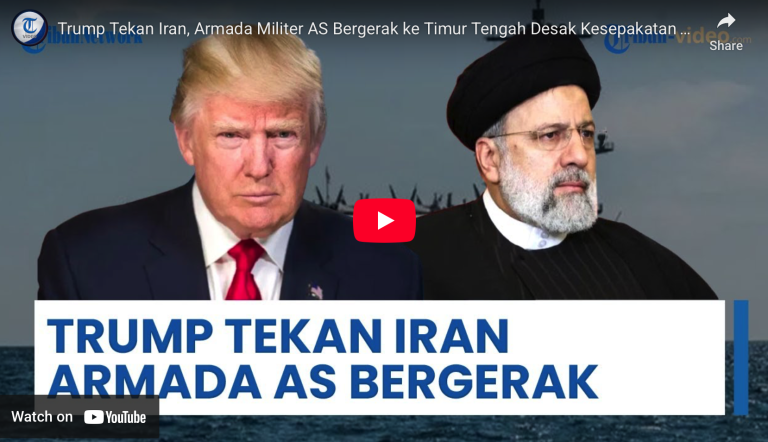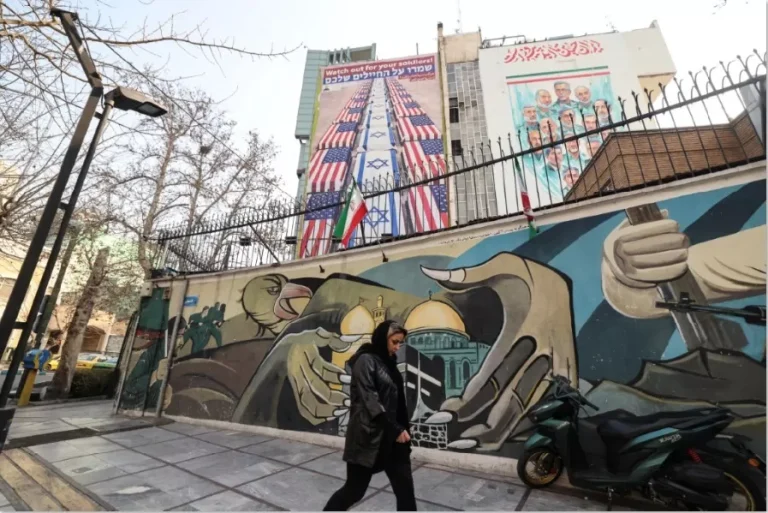
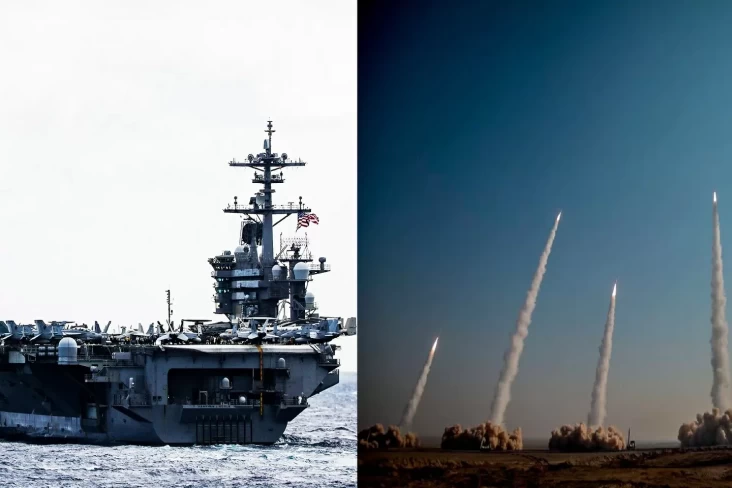
US President Donald Trump faces mounting pressure to launch a military response following the Iranian regime’s crackdown on nationwide protesters. While Trump has so far refrained from authorizing a strike, military operations remain a distinct possibility, with US officials indicating that a critical decision point may emerge in the coming weeks.
This prospect alarms nearly every nation in the Middle East—with the exception of Israel. Regional actors view a US strike on Iran as a dangerous gamble that would expose neighboring countries to severe geopolitical, economic, and security risks.
Stability Over Regime Change According to a report by The New Arab (TNA) on Sunday (Jan 25, 2026), Middle Eastern nations fear the immediate destabilizing consequences of a US-Israeli military intervention. Rather than ushering in a stable post-conflict order, they worry a strike would ignite prolonged chaos, potential civil war, and a massive refugee crisis that could overwhelm the region’s fragile political and economic systems.
Internal fragmentation within Iran also raises the specter of ethnic separatism among Arab, Baloch, and Kurdish minorities—developments that would pose acute security threats to neighbors like Turkey and Pakistan. From this perspective, the survival of the Iranian state, however flawed, is preferred over the uncertainty of a total collapse.
The Risk of Uncontrollable Contagion Regional governments are more concerned with uncontrollable secondary effects than the survival of the Iranian government itself. They anticipate Iranian retaliation against energy infrastructure, shipping lanes, and military installations, which would paralyze trade and investment. The fear encompasses cyberattacks, militia mobilization, and widespread insecurity across Iraq, the GCC, Lebanon, Syria, and Yemen.
“Another failed regime change effort would sow horrific chaos across the region,” said Joshua Landis, Director of the Center for Middle East Studies at the University of Oklahoma. Many nations cynically prefer a weakened Iran under the Islamic Republic—seeing its fragility as more predictable than the radical uncertainty of revolution.
Shifting Threat Perceptions: Israel vs. Iran Geopolitical dynamics have shifted regional anxieties. Since October 2023, Arab nations increasingly view Israel’s aggressive foreign policy, rather than Iran, as the primary threat to stability. This sentiment was bolstered following the “12-Day War” in June 2025, when Israeli strikes disrupted US-Iran nuclear negotiations.
Trita Parsi, Executive Vice President of the Quincy Institute, noted that regional players now see Israel’s actions as an “unrestrained threat.” Consequently, nations like Saudi Arabia, Pakistan, and Turkey are moving toward new coalitions to balance power against Israel, where a functioning Iran—rather than a pro-Israel puppet state or a chaotic vacuum—serves as a necessary regional buffer.
The “De-escalation Entrepreneurs” Amidst the tension, GCC states—particularly Oman, Qatar, and Saudi Arabia—alongside Turkey, have emerged as “de-escalation entrepreneurs.” They are engaged in high-level diplomacy to persuade the Trump administration toward a diplomatic exit.
By leveraging their control over military bases and logistics, and acting as credible intermediaries, these nations are shaping Trump’s risk assessment. They argue that while a limited strike might be symbolic, the strategic retaliation and political fallout would be catastrophic for global energy markets and domestic stability.
Conclusion The lesson from past interventions in Afghanistan, Iraq, and Libya has fostered a deep skepticism toward foreign-led military solutions. For the Middle East, the calculation is pragmatic: chaos in Iran would inevitably spill over borders, undermining the entire region. In this fragile landscape, measured diplomacy remains the only viable instrument for maintaining a precarious balance.
About the Author