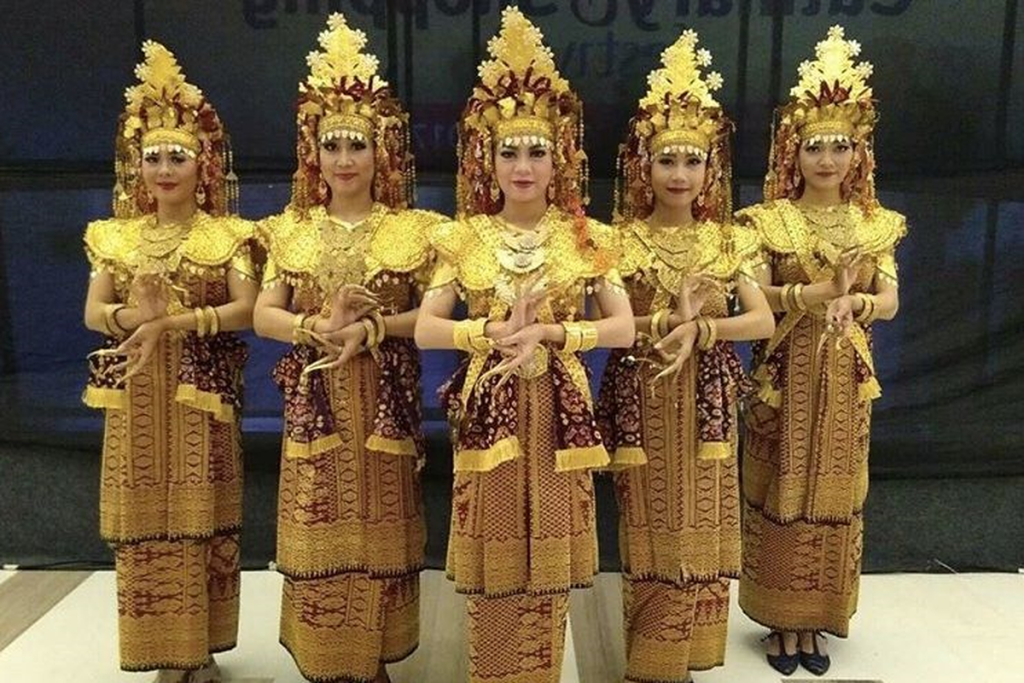
Aside from the well-known Gending Sriwijaya dance, the city of Palembang also boasts the Tari Tanggai. This traditional welcoming dance from Palembang, South Sumatra, is primarily performed for wedding ceremonies and to greet guests visiting the city. While Gending Sriwijaya is associated with the province of South Sumatra as a whole, Tari Tanggai is specifically dedicated to welcoming visitors to Palembang.
The History of Tari Tanggai
- 5th Century Roots: Originally, the dance served as an offering to Lord Shiva, where dancers brought offerings (sesajian) consisting of various fruits and flowers.
- Sacred Origins: Due to its role in delivering offerings, it was historically categorized as a sacred ritual dance.
- Etymology: The name “Tanggai” comes from the copper claw-like plates (fingernail extensions) worn on eight of the dancer’s fingers, excluding the thumbs.
- Cultural Influence: The dance shares similarities with Chinese dances because it was influenced by a great Buddhist kingdom built by descendants of the Shailendra dynasty, who taught it as a dance of offering.
- 17th Century Restrictions: During the Palembang Darussalam Sultanate, women were prohibited from dancing, leading to all performances—including Tari Tanggai—being played by men.
- 1920s Tradition: By 1920, the dance was utilized by parents in Palembang as a way to find potential spouses for their children, a tradition known as Rasan Tuo.
- 1965 Evolution: After Gending Sriwijaya was banned in 1965, a new version of Tari Tanggai was created by Elly Rudi, set to the song “Enam Saudara” to continue the tradition of welcoming guests to Palembang.
Meaning and Attire
Tari Tanggai is performed by five dancers wearing traditional Palembang attire, specifically the Aesan Gede. The ensemble includes:
- Songket cloth, Dodot, Pending (belt), and Kalung (necklace).
- Sanggul Malang (hair bun), Kembang Urat or Rampai, Tajuk Cempak, and Kembang Goyang.
- Tanggai (golden fingernail extensions).
- Tepak: A rectangular box containing betel leaves, tobacco, gambier, areca nut, and lime, offered to the guests.
Symbolism: The dance combines graceful movements with regional costumes to portray the people of Palembang as hospitable, respectful, and affectionate toward their guests.
Dance Movements and Their Meanings
According to Gabriella Saras Katungga (2019), the movements in Tari Tanggai hold deep philosophical values:
- Gerak Ulur Benang: Represents the activities of Palembang women in weaving and embroidering.
- Gerak Tabur: Mimics the act of sowing, symbolizing the spreading of kindness and religious teachings.
- Gerak Memohon: A gesture of requesting all that is good from God, reflecting the devout nature of the community.
- Gerak Suri: Mimics combing hair, symbolizing a woman’s duty to maintain her honor and grooming.
- Gerak Elang Terbang: Men-mimicking an eagle in flight, symbolizing the need for humans to be agile in all endeavors.
- Gerak Abstrak: Aesthetic transitional movements such as Gerak Silang (crossing) or Gerak Keset (slow walking).
- Gerak Kecubung: A spinning movement named after the Kecubung plant, known for its medicinal benefits.
- Gerak Tafakur: Represents reflection and surrendering oneself to the Creator.
- Gerak Menyumping: Derived from cuping (ear), symbolizing humility and the act of listening.
- Gerak Siguntang Mahameru: Named after the highest hill in Palembang, once used for Buddhist religious ceremonies.
- Gerak Stupa: Reflects the philosophy that humans must think carefully before acting for the benefit of themselves and others.
- Gerak Borobudur: Symbolizes the balance between focused thought, feeling, effort, and prayer.
- Gerak Tolak Bala: Represents warding off danger and evil, emphasizing that women must protect their honor.
About the Author